

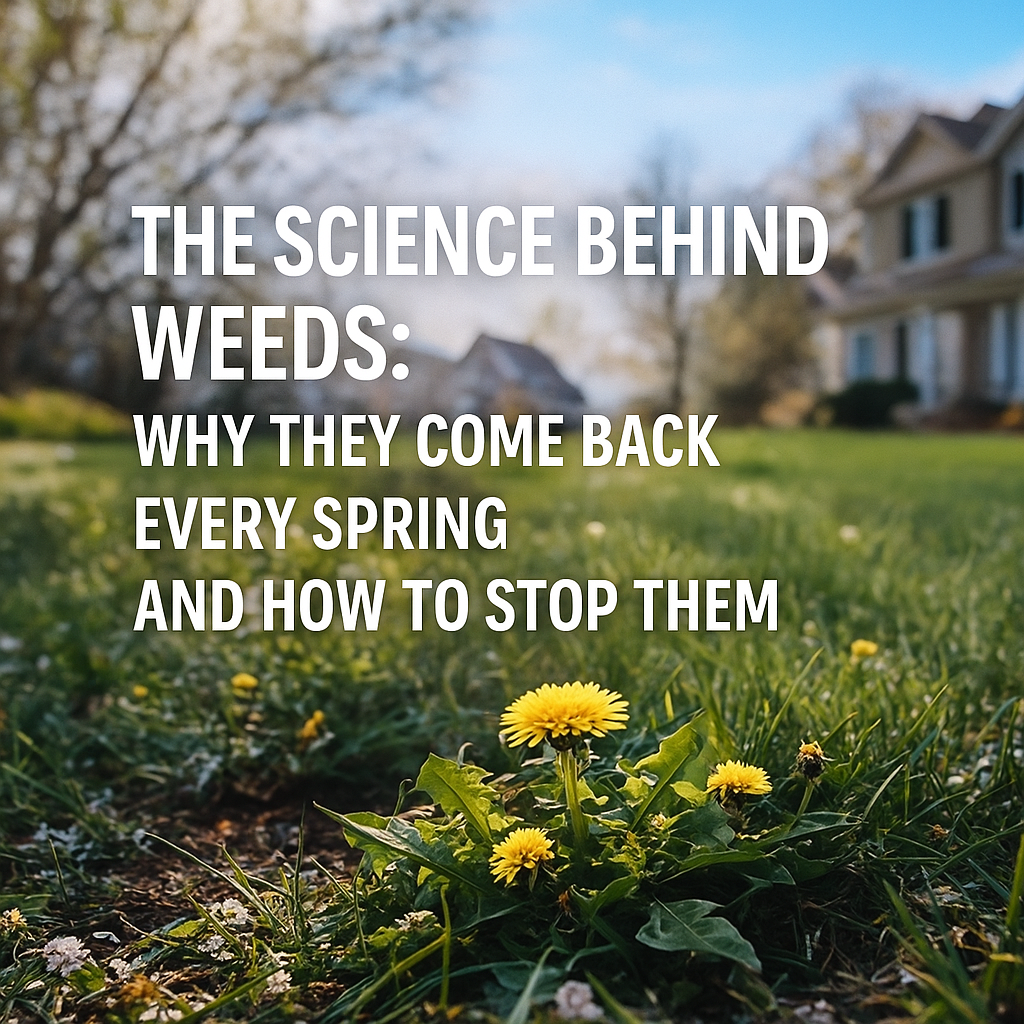
Every spring, homeowners in Central Pennsylvania see the same frustrating pattern—new weeds popping up everywhere, even in lawns that looked clean the year before. Crabgrass, clover, dandelions, wild violets, and ground ivy erupt as soon as temperatures warm, often before grass even wakes up from winter dormancy.
If it feels like weeds always come back no matter what you do, there’s a scientific reason for it. In fact, weeds have one job – survive – and they’re incredibly good at it.
At Ridge Side Turf Care, we help homeowners across Danville, Bloomsburg, Northumberland, Selinsgrove, Sunbury, Lewisburg, Elysburg, and surrounding areas understand how weeds work so we can help stop them at the root (quite literally).
Let’s break down why weeds return each spring and more importantly – what to do to prevent them.
1. Weed Seeds Can Survive for Years Beneath the Soil
Most homeowners don’t realize this, but weed seeds can remain viable in soil for 5 to 30+ years. This “seed bank” sits dormant until conditions are right.
What Triggers Seed Germination?
Weed seeds respond to:
- Soil temperature
- Moisture
- Sunlight
- Oxygen
- Disturbed soil (aeration, traffic, digging)
When spring temperatures warm up, conditions become ideal for germination—especially for crabgrass.
That’s why weeds keep coming back even if you pulled them last year. New weeds don’t need to blow in—they’re already waiting underground.
2. Winter Dormancy Actually Helps Weeds Survive
Many of Pennsylvania’s worst weeds are specifically adapted to winter.
There Are Two Types of Weeds
- Annual weeds – sprout, grow, and die in one season
- Perennial weeds – survive year after year through strong root systems
Annual Weeds
- Crabgrass
- Goosegrass
- Foxtail
These weeds spread thousands of seeds before dying in fall. The seeds survive winter underground, protected from cold weather.
Perennial Weeds
- Dandelions
- Wild violets
- Clover
- Ground ivy (creeping charlie)
- Thistle
These survive winter with:
- Deep taproots
- Spreading rhizomes
- Underground stems
Even if the top of the plant dies, it regrows from the root system in spring.
3. Weeds Wake Up Faster Than Grass in Spring
Your lawn wakes up slowly. Weeds do not.
Why Weeds Green Up First
Weeds:
- Grow aggressively at colder temperatures
- Germinate earlier
- Take advantage of weak early-season grass
- Spread roots faster than fescue or bluegrass
This early jumpstart helps them steal nutrients, water, and sunlight before turf becomes active.
4. Thin or Weak Grass Gives Weeds the Perfect Opportunity
Weeds don’t grow well in dense, healthy grass. They thrive where turf is weak.
Common causes of thin turf in Central PA:
- Poor soil nutrients
- Compaction from winter
- Shade
- Drought stress
- Poor mowing practices
- Winter damage
- Salt damage
- Pet traffic
These thin or bare spots become hotspots for weed growth.
The Solution: Strengthen the Turf
A strong, healthy lawn outcompetes weeds naturally. This means:
- Proper fertilization
- Aeration
- Correct mowing height
- Overseeding thin areas
5. Pre-Emergent Weed Control Is the Only Way to Stop Annual Weeds Before They Sprout
Pre-emergent weed control is the most important spring treatment for stopping weeds like crabgrass and goosegrass.
How Pre-Emergent Works
Pre-emergent creates a microscopic barrier in the soil that:
- Stops weed seeds from sprouting
- Prevents root formation
- Interrupts the growth cycle before you ever see the weed
But – and this is critical – timing is everything.
When Should Pre-Emergent Be Applied in Pennsylvania?
Before soil temperatures reach 55 degrees consistently, which is usually:
- Late March
- Early April
If you miss this window, weed seeds germinate—and pre-emergent no longer works.
6. Post-Emergent Weed Control Is Needed for Perennials
Because perennial weeds survive winter underground, only post-emergent (after they sprout) weed control will stop them.
Common Perennial Weeds in Central PA
- Wild violets
- Clover
- Dandelions
- Ground ivy
- Thistle
- Plantain
These weeds:
- Have strong root systems
- Spread aggressively
- Return year after year
To stop them, they require:
- Targeted broadleaf applications
- Multiple treatments
- Proper timing
- Consistent lawn health improvement
This is why a full-season weed control program is far more effective than spot-treating once in spring.
7. Weeds Thrive in Unbalanced or Nutrient-Poor Soil
Unhealthy soil = unhealthy grass.
Unhealthy grass = weeds have room to take over.
Signs of Poor Soil Health
- Pale grass
- Thin turf
- Moss growth
- Compaction
- Excessive weeds each spring
Improving soil health with fertilization, aeration, and pH balancing boosts turf density—reducing weed pressure long-term.
8. Weed Seeds Spread Easily—Even if Your Lawn Was Clean Last Year
Weed seeds spread by:
- Wind
- Birds
- Pets
- Mowers
- Rain runoff
- Neighboring yards
Even if your lawn was weed-free last summer, new seeds may have arrived and are now waiting to germinate in spring.
This is why weed control is not a one-time treatment—it’s a seasonal cycle.
9. Hydroseeding or Overseeding Helps Reduce Long-Term Weed Growth
Thick turf naturally blocks weeds from growing.
Overseeding Helps When:
- Grass thins out
- There are bare patches
- Snow mold or salt damage occurs
- Traffic causes wear
Hydroseeding Helps When:
- You have large bare areas
- A new lawn is being installed
- Grass needs rapid coverage
- Erosion or runoff caused bare soil
Healthy turf = fewer weeds every spring.
10. The Best Strategy for Weed Prevention Is a Full-Season Program
Stopping weeds requires more than one spring application. It takes a consistent program built around turf science, soil conditions, and proper timing.
A Strong Weed Control Program Includes:
- Early-Spring Pre-Emergent (stops crabgrass before it sprouts)
- Spring Post-Emergent (kills visible weeds)
- Summer Broadleaf Treatments (controls persistent species)
- Fall Fertilization (strengthens turf for next year)
- Aeration (relieves compaction)
- Optional Overseeding (fills thin areas)
This layered approach dramatically reduces weed pressure year after year.
Stop Weeds Before They Start With Ridge Side Turf Care
Weeds come back every spring because their seeds, roots, and life cycles are designed to survive winter. But with the right program, you can finally get ahead of them.
Ridge Side Turf Care delivers professional, science-based weed control programs designed specifically for Pennsylvania lawns. Our seasonal treatments stop weeds at the right time and strengthen your lawn so it naturally resists weed invasion.
Ready for a cleaner, healthier lawn this spring?
Join our weed control program today and stop weeds before they take over.